
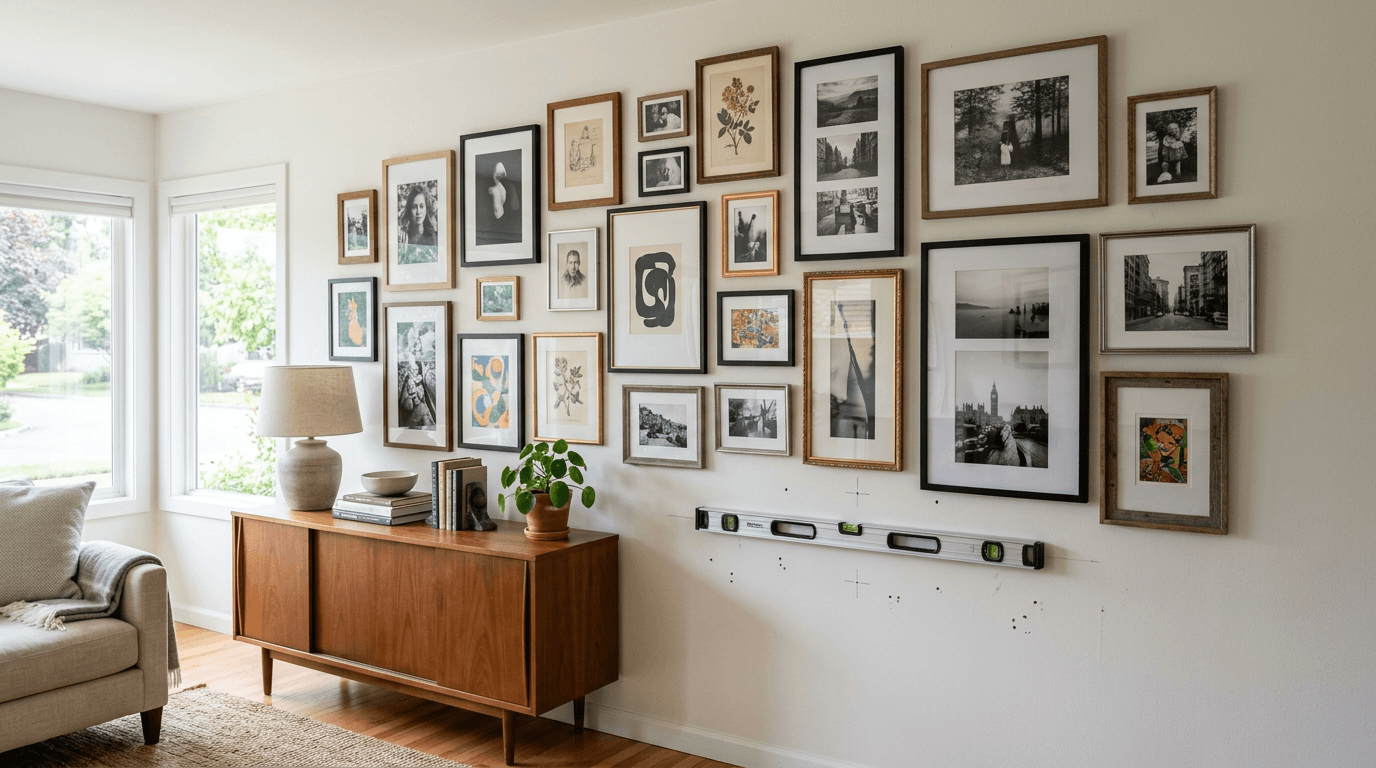
A single framed photo is easy — hammer, nail, done. But gallery walls, heavy mirrors, and plaster walls get complicated quickly. Crooked frames, holes in the wrong spot, and mirrors pulling out of the wall are all preventable with the right approach.
**The Basic Rules**
The center of artwork should be approximately 57 inches from the floor — standard museum hanging height that puts art at average eye level. Above furniture like a sofa or console table, keep the bottom of the frame six to eight inches above the surface.
**Choosing the Right Hardware**
Under ten pounds: a simple nail or picture hook in drywall. Ten to twenty-five pounds: a rated picture hook. Twenty-five to fifty pounds: toggle bolts or heavy-duty wall anchors. Over fifty pounds (large mirrors, heavy framed art): mount into wall studs with lag screws or use heavy-duty toggle anchors rated for the weight.
**Plaster Wall Considerations**
Older homes in Nyack, Piermont, and other Rockland County river towns often have plaster-and-lath walls. These are harder than drywall and crack easily when you drive a nail in. Pre-drill a pilot hole. Standard drywall anchors do not grip well in plaster — toggle bolts are the better choice for heavier items.
**Creating a Gallery Wall**
Planning is everything. Lay out the arrangement on the floor first. Trace frames onto craft paper, tape the shapes to the wall, and evaluate from across the room before making any holes.
Maintain one and a half to two inches between pieces. Start by hanging the center piece first and work outward to keep the arrangement centered and level.
**Heavy Mirror Hanging**
A heavy mirror should have at least one mounting point in a stud. Use two mounting points to distribute weight and prevent tilting. D-ring hangers provide more control than a wire. For mirrors over thirty pounds where studs are not in the right location, use toggle bolts rated for at least twice the mirror's weight.
**Grouping Above Furniture**
Art above a sofa should span roughly two-thirds the width of the furniture. Wider looks top-heavy; narrower looks timid. Same principle for console tables, mantels, and headboards.
**When to Call a Professional**
For gallery walls with many pieces, heavy mirrors, art on plaster, or anything requiring precision across a large area, professional hanging saves time and prevents unnecessary holes. At Odds & Ends, we come prepared with the right hardware, a laser level, and the experience to get it right. Request a free estimate.